Best integrated washing machine 2026, top picks and comparison
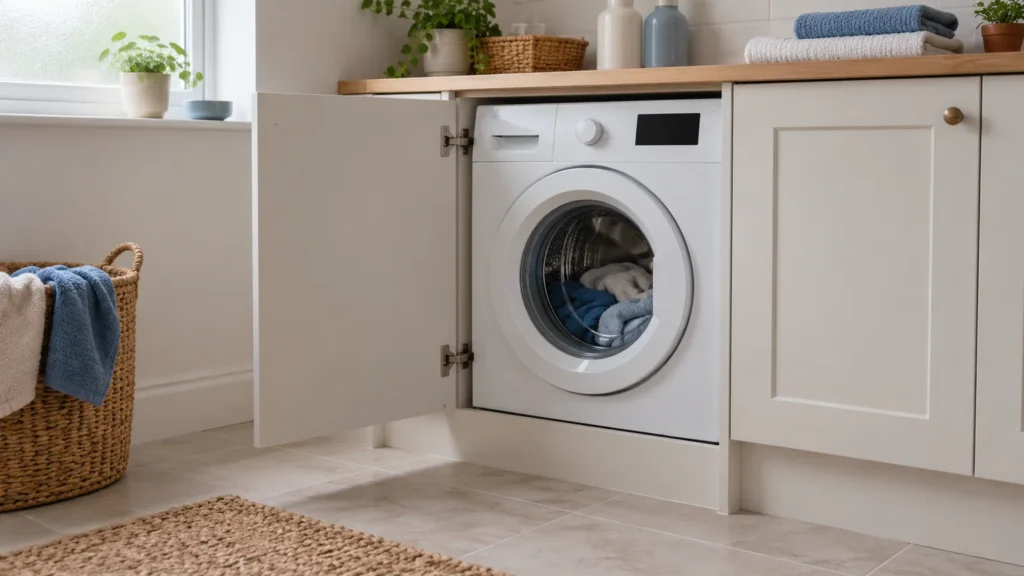
Designed to take a kitchen cabinet door, the integrated washing machine blends in with your cabinetry. Our selection of models lets you compare capacities and features that suit your laundry needs.
Prices collected from retailers are for guidance only: they may have changed since, the current price is the one shown by the retailer. No price is shown for models sold only on Amazon. Amounts converted from reference prices in euros using a dated exchange rate.
Where this selection comes from
- 1 model selected because they have the feature “Integrated” according to data published by manufacturers and retailers.
- See how we rate →
- No brand pays to be included in this selection or to rank higher.
Why choose an integrated washing machine for your kitchen?
Why choose an integrated washing machine for your kitchen?
The best integrated washing machine is one that can be concealed behind your kitchen cabinet door while meeting your laundry needs. Its main appeal is aesthetic: the appliance blends into the run of cabinets. This solution is particularly suitable when the kitchen shares a space with the living room.
This maintains a consistent look, keeping the washing machine door out of sight. However, choosing one requires more preparation. You need to check the available space, the requirements for attaching the cabinet door and access to the connections. A machine that looks appealing on paper will not be the right choice if installing it requires difficult alterations.
The cabinet door does not guarantee quiet operation. In a living space, the noise level during spinning remains a factor to assess separately.
What is the difference between integrated, built-under and freestanding?
These terms can be confusing in catalogues. When choosing, focus on the distinction between fitting beneath a worktop and attaching a cabinet door. An appliance described as built-under should not automatically be assumed to support a door that matches your cabinets.
- Integrated washing machine: check the manual for cabinet door fitting instructions and installation requirements.
- Built-under washing machine: check what this description means for the model you are considering.
- Freestanding washing machine: do not assume it can accommodate a cabinet door or be installed in an enclosed space without checking.
The marketing term alone is therefore not enough. The installation manual should confirm compatibility with your layout, particularly door opening and the clearances required.
When is an integrated model the right choice?
An integrated model primarily meets a kitchen layout need. Your decision depends on where you do your laundry and how much you value keeping the appliance out of sight.
- In an open-plan kitchen, it helps maintain a continuous run of cabinet fronts. Compare the stated noise levels and installation requirements too.
- In an existing fitted kitchen, it may help preserve the appearance of the cabinetry, provided it is compatible with the cabinet door, hinges and plinth.
- In a utility room, its aesthetic appeal may matter less. Prioritise your laundry needs, access to the drum and ease of maintenance instead.
If space is limited, also consider a compact washing machine, without assuming it is suitable for integration. For your budget, think in terms of entry-level, mid-range or high-end models based on their documented features. Add installation and any cabinet door adjustments to the cost of the appliance. A smart washing machine feature deserves your attention primarily if it meets a specific need.
What is our analysis of integrated washing machines based on?
Our approach is based on comparing documented specifications, available manuals and aggregated feedback where available. We do not physically test the products. We distinguish between verifiable facts, reported trends and points that remain uncertain.
A well-known brand or a long list of programmes is not enough to establish a model’s reliability. Installation requirements, laundry needs and maintenance options should guide your choice.
To browse the selection on this page, start with models that fit your kitchen. Then narrow down your choice based on your usual laundry, the stated noise level and the features that are useful in everyday life.
How to choose your integrated washing machine
The best integrated washing machine is the one that fits your kitchen and your usual laundry needs. Start by checking installation compatibility, then compare usable capacity, spin performance, noise and consumption. An appealing feature cannot make up for a cabinet door that cannot be attached or awkward access for maintenance.
How can you check whether the washing machine will actually fit in your kitchen?
Do not rely solely on the dimensions listed in a product listing. Compare the model’s installation drawing with the measurements of your cabinet recess, allowing for obstructions and connections. An appliance that fits under the worktop is not necessarily designed to take a cabinet door.
- Measure the available height, width and usable depth at several points.
- Locate the hoses, drain and socket to check the depth with connections in place.
- Check the feet’s adjustment range and the clearances specified in the manual.
- Compare the permitted cabinet door dimensions and weight, hinge positions and required fixings.
- Check that the plinth allows the door to open and that the drum door remains accessible.
When replacing an appliance, photograph the existing fixings and note their positions. A similar width does not guarantee that you can reuse your kitchen cabinet door.
What capacity should you choose for your usual laundry needs?
Start with your habits rather than automatically matching capacity to the number of people in your household. Frequent, small loads create different needs from less frequent loads that include bed linen.
The key figure is the permitted load for your usual programmes. Check the programme table in the manual for delicate fabrics, short cycles or clothes you wash regularly. Do not assume that the maximum capacity applies to every programme.
For bulky items, check the manufacturer’s guidance and the fabric care instructions. Choose a larger capacity only if it meets a recurring need, without compromising the fit in your cabinet recess.
How do you compare noise and spin performance?
Look at maximum spin speed, spin efficiency and the declared noise level separately. Speed alone is not enough to distinguish between appliances. If you dry your laundry on a drying rack, pay particular attention to the documented spin efficiency.
In an open-plan kitchen, compare the spin noise level using equivalent information. Do not assume that an appliance is quiet based solely on its motor’s name or its high-end positioning.
Vibrations also warrant checking the installation. Before concluding that the appliance is faulty, have its levelling, stability, removal of transport restraints and clearance from surrounding cabinets checked in accordance with the manual.
How do you interpret consumption figures and choose useful programmes?
Compare the energy label and product information sheet together. Look at electricity consumption, water consumption, capacity and the duration of the reference programme. The energy rating covers part of the decision, but does not describe all your laundry cycles.
Then check the programmes your laundry actually needs, their permitted loads and their durations. A quick programme guarantees neither low consumption nor the ability to fill the drum to its maximum capacity.
A washing machine with a delay end function can be useful if you want your laundry ready at a specific time. For a washing machine with a steam function, check the intended use described in the manual before making this option a deciding factor.
Which range suits your priorities?
At entry level, focus first on installation compatibility and essential programmes. In the mid-range, check that the documented differences make everyday tasks easier. At the premium end, expect a clear benefit for your priorities before choosing extra features.
These market positions alone guarantee neither quiet operation nor durability. Compare the specifications of each model rather than the promises associated with its range.
Think in terms of the overall installation budget. Ask what delivery, installation, any adjustments to the cabinet door and removal of the old appliance include. Clarify any additional work before ordering.
How can you plan for repairs and choose between the finalists?
Check the warranty terms, repair arrangements and stated availability of spare parts. Also identify the access needed for routine maintenance and whether the appliance can be removed from its recess. Repairs should not depend on unexpectedly dismantling kitchen units.
Use this checklist to choose between compatible appliances, without assuming reliability based on brand.
| Criterion | What to look for | Common mistake |
|---|---|---|
| Installation | Installation requirements in the manual that match the recess and cabinet door | Comparing width alone |
| Capacity | A load capacity suited to the programmes you use | Considering only the maximum capacity |
| Spin performance and noise | Documented efficiency and noise levels | Relying on spin speed alone |
| Consumption | Comparing under equivalent conditions | Assuming a short cycle saves resources |
| Maintenance | Planned access and identifiable spare parts | Relying on the brand’s reputation |
Mistakes to avoid
- Ordering before checking the installation diagram.
- Assuming the existing hinges will be compatible.
- Overlooking door clearance and access to connections.
- Choosing a large capacity you cannot use on your favourite cycles.
- Forgetting to budget for cabinet door adjustments.
Key takeaways
Confirm installation requirements before considering features. Then choose the right capacity for your cycles and weigh up noise, spin performance and documented consumption figures. Where specifications are similar, prioritise clearly defined installation, maintenance and repair arrangements.
Your questions about choosing an integrated washing machine
Which integrated washing machine brand is the most reliable?
No brand can be named the most reliable without comparable data on faults and how they develop over time. When choosing, check the specific model, warranty terms, stated spare parts availability and after-sales service. Brand reputation alone is not enough to distinguish between appliances. User feedback is most useful when it describes recurring problems with the model you are considering.
Which washing machine brands should you avoid?
There is no justification for ruling out an entire brand without solid evidence about its appliances. Instead, rule out models whose compatibility with your kitchen is uncertain or whose repair arrangements are difficult to verify. An accessible installation manual, identifiable spare parts and a clearly listed after-sales contact make your decision easier. A single comment does not establish a recurring fault.
What is the best integrated washing machine for your kitchen?
The best integrated washing machine is the one that fits your cabinet and suits your usual laundry needs. First, check compatibility with the cabinet recess and furniture door, then compare usable capacity, spin noise levels and declared consumption figures. Also check the permitted loads for your favourite programmes. A connected washing machine is only worthwhile if its features meet a specific everyday need.
What is the difference between an integrated washing machine and a built-in washing machine?
An integrated washing machine is designed to have a furniture door attached, while the term “built-in” can refer more broadly to an appliance intended to fit into a recess. Product descriptions alone are therefore not enough to make your choice. For a washing machine concealed behind a furniture door, check the manual for the mounting system and installation requirements. Simply fitting under a worktop does not guarantee this option.
Can you install a freestanding washing machine behind a kitchen door?
This depends on the cabinet and the appliance's installation requirements. A freestanding washing machine should not be considered compatible with a furniture door attached to the appliance unless the manufacturer explicitly states this. If the door is separate and attached to the cabinet, check the required clearances, the depth including connections and clearance for opening the washing machine door. The detergent drawer and maintenance components must also remain accessible.
How do you check compatibility with an existing kitchen furniture door?
Compare the new appliance's installation diagram with your furniture door and its current fixings. Check the permitted door dimensions and weight, hinge positions and intended opening direction. Also check that the door opens without hitting the plinth or neighbouring cabinets. A compatible width is not enough to guarantee that existing drilled holes can be reused. Have any necessary modifications confirmed before ordering.
How do you choose a quiet integrated washing machine for an open-plan kitchen?
Prioritise the declared spin noise level and the noise class shown on the energy label. Distinguish this information from spin efficiency, which concerns how dry the laundry is at the end of the cycle. Installation quality also matters when it comes to limiting vibrations. Check the levelling instructions and required clearances. A washing machine with a delayed finish option can help you schedule laundry for times when you are not using the kitchen.
Can you replace an integrated washing machine without modifying the cabinets?
Yes, if the new appliance meets the requirements of the existing recess, furniture door and connections. Measure the available space, then compare the installation manuals for the models you are considering. Pay particular attention to the hinges, adjustable feet and plinth clearance. The furniture door may need modification even when the appliance fits inside the cabinet. Also allow for the access needed to remove the old washing machine and connect the new one.