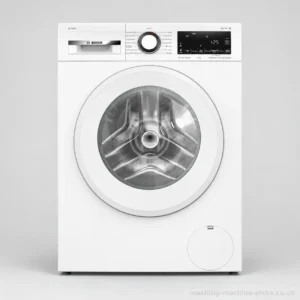
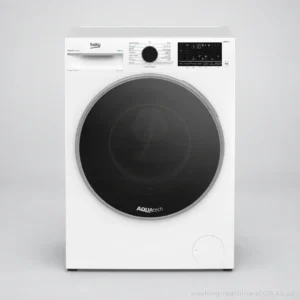
Beko B3WFT51243W
Key strength: washing capacity, rated 9.4/10.
Read the review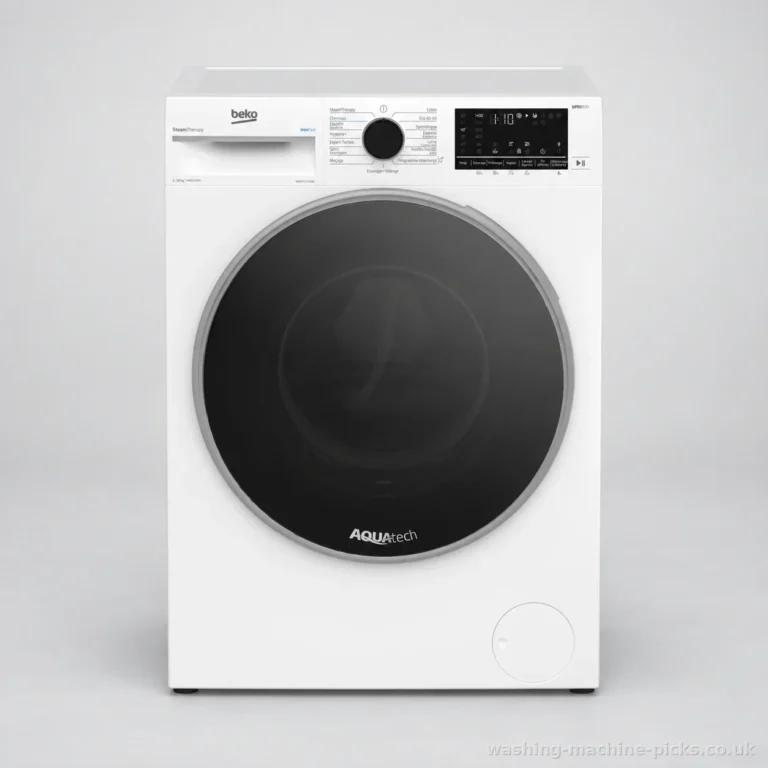 Our rankingsThe best washing machines26 washing machines
By installation
By features
Features and options
By brand
Our guides to choosing
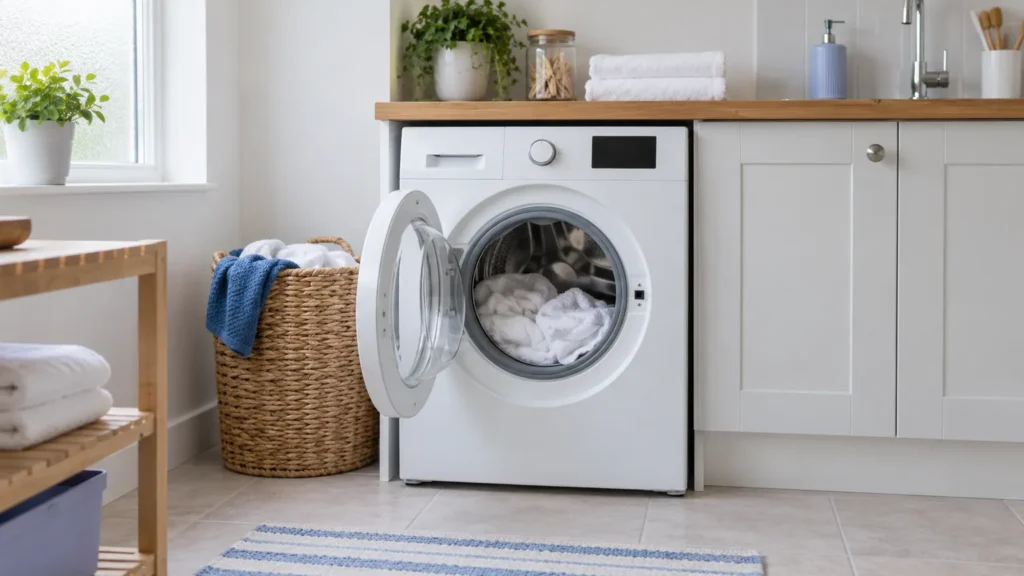
A white washing machine should earn its place through the laundry it handles, rather than the colour of its door. For a family facing towels, bedding and school clothes, we favour generous capacity and a useful spin. For a flat with thin walls, noise changes the recommendation. Our selection separates those priorities so you can choose a machine that suits your household without making washday more complicated.
Prices collected from retailers are for guidance only: they may have changed since, the current price is the one shown by the retailer. No price is shown for models sold only on Amazon. Amounts converted from reference prices in euros using a dated exchange rate.
Key strength: washing capacity, rated 9.4/10.
Read the review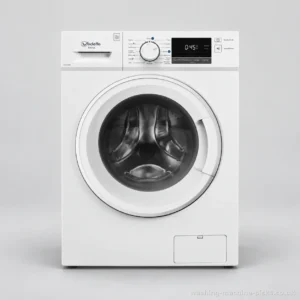
Key strength: washing capacity, rated 9.4/10.
Read the review
Top-ranked for equipment.
Read the review| Rankings | Rating | Price | Washing capacity | Drying capacity | Dimensions: width | Dimensions: depth | Dimensions: height | Spin speed | Noise level during spin | Drum volume | Repairability index | Durability index |
|---|---|---|---|---|---|---|---|---|---|---|---|---|
| 1. Beko B3WFT51243W | 9/10 | £425 | 12 kg | n/a | 60 cm | n/a | 84.5 cm | 1400 rpm | n/a | 75 L | 8.9 out of 10 | 8.8 out of 10 |
| 2. Vedette LFVQ124W | 8.6/10 | n/a | 12 kg | n/a | 59.5 cm | n/a | 85 cm | 1400 rpm | 78 dB | 76 L | n/a | n/a |
| 3. Bosch WAN2827ZFR | 8.5/10 | £442 | 9 kg | n/a | 59.8 cm | 63.2 cm | 84.5 cm | 1400 rpm | 72 dB | 65 L | n/a | n/a |
| 4. Bosch WGG244F1FR | 8.5/10 | £541 | 9 kg | n/a | 59.8 cm | 63.2 cm | 84.5 cm | 1400 rpm | 71 dB | 65 L | 9.2 out of 10 | n/a |
| 5. Candy CSS1414TWMBE | 8.4/10 | £456 | 14 kg | n/a | 60 cm | n/a | 85 cm | 1400 rpm | 80 dB | 83 L | 7.8 out of 10 | 7 out of 10 |
Rankings are based on our review ratings, calculated by comparing manufacturer specifications across the full catalogue.Our methodology.
The laundry basket can contain several quite different jobs: muddy sports kit, pale shirts, towels and the bedding stripped from every bed. A generous drum helps with the larger batches, but it cannot turn incompatible fabrics into a sensible load. Before choosing the biggest white washing machine, think about which piles actually go through the door together. That is where useful capacity begins.
Across this selection, washing capacity runs from 5 kg to 14 kg. That spread matters more than the shared colour. At the smaller end, frequent loads are part of the arrangement; towards the larger end, there is scope for substantial batches and bulky household linen. The capacity in kilos applies to a full cotton load: synthetics and wool programmes accept much less. Keep that distinction in mind if your basket contains more jumpers than cotton towels.
The Beko B3WFT51243W is our clearest family recommendation. Its washing capacity of 12 kg places it among the strongest choices on the site for this requirement. Its drum volume of 75 L provides space for substantial laundry loads. We like that combination for households whose bedding and towels regularly fill the basket. A large drum should serve your routine, though; it need not become an invitation to save every sock until the basket resembles a small hill.
Capacity and drum volume answer related questions. The weight allowance tells you how much a suitable cotton programme can accept, while the drum volume describes the space available inside. Across the selection, drum volumes extend from 32 L to 83 L. For bulky linen, generous internal space is a useful companion to a generous weight allowance. With a duvet, follow its care label and the appliance's programme guidance rather than treating capacity alone as permission to squeeze it through the door.
The Vedette LFVQ124W for family loads belongs beside the Beko on a family shortlist. Washing capacity is 12 kg, with a drum volume of 76 L. Both capacity and drum space sit among the strongest on the site. Like the Beko, it is among the better rated models in this selection. Its remaining time display helps you organise the next load around the school run or clear the machine before heading out.
Both models have a quick programme and a remaining time display. Those are useful conveniences, but the larger cotton capacity should not become your assumed allowance for a quick wash. Use the load guidance for the programme you select. A smaller urgent batch and a substantial bedding load are different jobs, even when they share the same drum.
The Haier HW50-BP12307-S takes a different approach. Its capacity of 5 kg and drum volume of 32 L suit small, frequent batches. Avoid it if your main aim is to gather a large household's washing into fewer substantial loads. Conversely, a household that separates everything into modest piles should consider that smaller format. A cupboard full of school jumpers does not automatically call for the largest cotton allowance.
For a family regularly washing bulky cotton loads, choose Beko B3WFT51243W for bulky laundry. Its generous capacity, roomy drum and vigorous spin make a coherent package for that job, with an A washing energy class adding to its appeal. The Vedette is another strong choice for large batches in a separate utility room, but its declared spin noise limits its appeal in a flat.
A washing machine can occupy a modest corner of a flat and still make its presence known across several rooms. If your kitchen opens into the sitting room, or the adjoining wall belongs to a neighbour, the spin needs close attention. Choosing white gives you a familiar finish; choosing the right noise characteristics has a more direct effect on how comfortably washing fits around the rest of your day.
The Haier HW50-BP12307-S for quieter spinning is our choice for a flat with thin walls. Its declared spin noise level of 66 dB is among the quietest in this selection, and its spin noise class is A. That gives it a clear purpose here. You might be running a small load while somebody reads in the next room, rather than gathering the whole household's bedding into a single wash.
The declared noise level is measured during spinning, the noisiest phase. Treat it as a guide to that part of the programme, rather than a description of every moment from filling to draining. The selection's declared spin noise levels extend from 66 dB to 80 dB. That breadth is a reason to choose by model rather than assume that machines with the same finish will behave similarly.
The Haier's compact format also supports its appeal for smaller homes. It measures 51 cm wide, 49.2 cm deep and 70 cm high. Use those measurements when planning its position in a utility cupboard or kitchen recess, alongside the space required for connections and opening the door. Compact describes the machine; it does not remove the practical business of getting washing into it. A basket balanced in the hallway is nobody's favourite household arrangement.
Consider the route to that position too. A suitable recess is only part of the job if delivery involves a narrow entrance, a turn past the kitchen units or stairs down to a utility room. Organise the delivery service around the actual route and establish what installation includes. As appliance manuals require, transit bolts must be removed before first use and the machine must be level. Arrange for the installer to complete those steps before starting the first wash.
The compromise with the Haier is capacity. Its smaller drum suits regular modest loads, and its spin speed of 1200 rpm is standard rather than especially vigorous. Its spin efficiency class is C. Choose it because quieter spinning and a compact body suit your circumstances, while accepting that large family batches belong with the Beko or Vedette. Its delay end function offers another way to organise washing around the household's timetable.
The Vedette LFVQ124W needs a different setting. At 78 dB, its declared spin noise is among the loudest, so we would avoid it for late evening washing in a flat. Its spin noise class is C, as is the Beko's; that shared class gives neither model an advantage over the other. The Vedette's considerable capacity remains useful, but it makes more sense where the machine can run away from shared living space and at a considerate time.
This selection does not suit someone seeking an integrated appliance behind a matching furniture door: every model is freestanding and front-loading. Nor would we steer a household needing large batches towards the compact Haier merely to settle the noise question. For small, frequent loads in a flat where neighbouring rooms matter, choose Haier HW50-BP12307-S for thin walls. Its combination of compact dimensions and quieter declared spinning is the most convincing match for that setting.
Getting laundry washed is only part of the household logistics. In a home relying on a clothes airer, the next question is where everything will dry. Sheets can occupy most of the available space before the smaller items arrive. A vigorous spin is useful here because it helps remove moisture before you hang the load. It cannot provide extra drying space, but it can help the washing reach that stage better prepared.
Spin speeds in this selection range from 1200 rpm to 1400 rpm. The Beko B3WFT51243W reaches 1400 rpm, while the Vedette LFVQ124W offers 1400 rpm. Both are among the strongest models on the site for spin speed, and both have spin efficiency class B. For households drying substantial loads on a line or airer, these are more persuasive choices than the smaller Haier.
That preference comes with a practical question: can you hang the whole load when it finishes? A generous washing allowance is useful for family bedding, but filling every available drying rail leaves little room for the next batch. Plan the load around both the drum and the drying space. Keep fabric care instructions in charge of programme choice, too; the machine's maximum spin speed is not an instruction to use it for everything.
We like the Vedette LFVQ124W for airer drying for substantial loads in a household with a separate utility room. Its remaining time display helps you organise when to hang the washing. What holds us back is its declared spin noise: we would avoid it for late evening loads in a flat, especially near neighbouring living space. The capacity is appealing, but you have to live alongside the machine as well as fill it.
The Beko combines its strong spin with washing energy class A; the Vedette has washing energy class B. The Haier is also class A, so a smaller appliance can still offer that rating. We would use the energy class alongside capacity, spin and noise rather than let a letter make the whole decision. The machine has to accommodate the loads you wash and the room where it will operate.
Programme duration also needs sensible expectations. A long eco programme is not a fault: its duration is part of how the appliance achieves its energy rating. A quick programme has a different role, governed by its own fabric and load guidance. Looking at the remaining time can help you arrange your afternoon; choosing the shortest programme simply because the basket is full is a less useful habit.
For longer ownership, the Beko offers useful supporting indicators: its repairability rating is 8.9 out of 10, and its durability rating is 8.8 out of 10. Neither guarantees an individual appliance's lifespan. Read the warranty and after sales arrangements alongside them. Establish who handles a repair, what the cover includes and how a service visit is arranged. The white finish itself should not decide your expectations of support.
Before ordering, organise delivery, connection and removal of the old appliance explicitly. Read the returns policy, particularly the terms covering an appliance that has been connected. The Beko is 60 cm wide and 84.5 cm high; the Vedette is 59.5 cm wide and 85 cm high. Depth measurements for these models are absent from the specifications presented here, so width and height alone do not confirm a fit in a recess. Obtain the full dimensions before ordering, allowing space for connections and door movement.
With 13 choices across 8 brands, start by separating family-sized loads from compact requirements. The selection average of 8.2 provides context, but a strong overall rating should never outweigh a mismatch with your laundry or room. For a busy family drying large loads on an airer, choose Beko B3WFT51243W for strong spinning. It brings together the capacity, spin and energy class we would put first for that routine.
Start with the loads your household regularly washes together. The Beko and Vedette offer generous capacity for substantial cotton loads and bulky linen. The Haier suits smaller, frequent batches. The capacity in kilos applies to a full cotton load: synthetics and wool programmes accept much less.
All are freestanding and front-loading, so allow space for connections, door opening and loading. The Haier's compact dimensions help with planning smaller spaces. For the Beko and Vedette, obtain their depth measurements alongside the supplied width and height before committing to a recess.
An individual lifespan is never guaranteed by a rating. The Beko's repairability rating of 8.9 out of 10 and durability rating of 8.8 out of 10 provide supporting indicators. Consider warranty cover and repair support alongside them, and follow the manufacturer's care instructions for the drum, seal and detergent drawer.
Use the programme guidance for the fabric, load and degree of soiling rather than choosing purely by duration. A long eco programme is not a fault: its duration is part of how the appliance achieves its energy rating. Reserve a quick programme for the loads its instructions specify.
Compare declared spin noise and the spin noise class. The declared noise level is measured during spinning, the noisiest phase. The Haier offers 66 dB and class A, making it our recommendation for thin walls. Avoid the Vedette for late evening washing near neighbouring living space.
A vigorous spin is useful when laundry dries on a line or airer. The Beko and Vedette are the stronger choices here, both with spin efficiency class B. Follow the fabric's care instructions when selecting a programme; maximum spin speed need not be the setting for every load.
We favour class A when the appliance also suits your loads and available space. Both the Beko and Haier have that washing energy class, despite serving quite different households. The Vedette is class B. Use the rating alongside capacity and noise rather than letting it decide alone.
These models are freestanding, so choose them for a kitchen arrangement that accommodates a freestanding appliance. A matching furniture door requires a machine designed for that installation. Measure the full recess, allow for connections and door movement, and organise delivery, connection and old appliance removal before ordering.