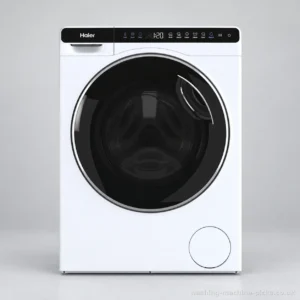
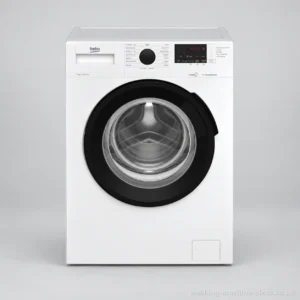
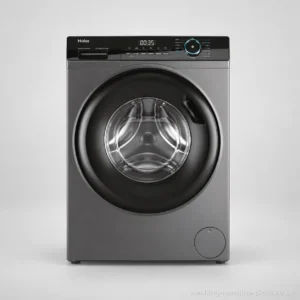
Haier HW90-B14939S8
Key strength: equipment, rated 9.5/10.
Read the review Our rankingsThe best washing machines26 washing machines
By installation
By features
Features and options
By brand
Our guides to choosing
Delay end schedules when the wash finishes, while delay start postpones when it begins. A washing machine with delay end therefore lets you plan when to unload your laundry around your availability.
Prices collected from retailers are for guidance only: they may have changed since, the current price is the one shown by the retailer. No price is shown for models sold only on Amazon. Amounts converted from reference prices in euros using a dated exchange rate.
Key strength: equipment, rated 9.5/10.
Read the review
Key strength: equipment, rated 9.5/10.
Read the review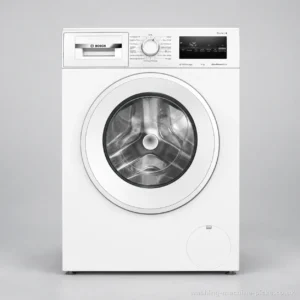
Key strength: equipment, rated 9.4/10.
Read the review| Rankings | Rating | Price | Washing capacity | Drying capacity | Dimensions: width | Dimensions: depth | Dimensions: height | Spin speed | Noise level during spin | Drum volume | Repairability index | Durability index |
|---|---|---|---|---|---|---|---|---|---|---|---|---|
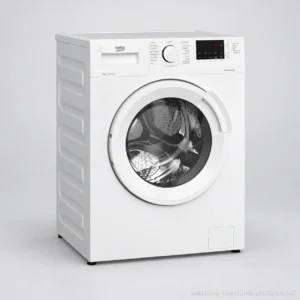
| 1. Haier HW90-B14939S8 | 8.8/10 | £339 | 9 kg | n/a | 59.5 cm | n/a | 85 cm | 1400 rpm | 67 dB | 65 L | 8.8 out of 10 | 9.3 out of 10 |
| 2. Haier HW90-B14939S8-FR | 8.8/10 | n/a | 9 kg | n/a | 59.5 cm | n/a | 85 cm | 1400 rpm | 67 dB | 65 L | 8.8 out of 10 | 9.3 out of 10 |
| 3. Bosch WAN2827ZFR | 8.5/10 | £442 | 9 kg | n/a | 59.8 cm | 63.2 cm | 84.5 cm | 1400 rpm | 72 dB | 65 L | n/a | n/a |
| 4. Beko WTV95220W | 8.1/10 | £161 | 9 kg | n/a | 60 cm | n/a | 84 cm | 1400 rpm | n/a | n/a | n/a | n/a |
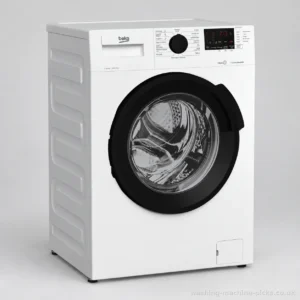
| 5. Beko WTE10222XW | 7.8/10 | n/a | 10 kg | n/a | 60 cm | n/a | 84 cm | 1200 rpm | n/a | n/a | n/a | n/a |
Rankings are based on our review ratings, calculated by comparing manufacturer specifications across the full catalogue.Our methodology.
A washing machine with a delayed finish lets you schedule the wash to finish when you can take the laundry out. The best washing machine with a delayed finish therefore combines this flexibility with a suitable capacity, clear controls and specifications that suit your home.
This function is particularly useful for people with regular daily schedules. You prepare the laundry in advance and schedule it to finish when you will be available. The practical benefit is being able to hang out the laundry without leaving it sitting in the drum for long after washing.
Scheduling is still only part of the picture. If space is limited, a compact washing machine also deserves consideration. The function you want should not make you overlook installation constraints.
The difference between delayed start and delayed finish lies in the point in the cycle you schedule.
| Function | What you set | Practical benefit |
|---|---|---|
| Delayed start | The delay before the wash starts | Choose when the machine starts running |
| Delayed finish | The delay before the wash finishes, as described in the manual | Plan when to take out the laundry around your availability |
Be careful not to confuse a delay before the finish with a specific clock time. Check how the setting works in the manual for your chosen model.
Start with when you will actually be able to deal with the laundry. Scheduling the wash to finish just before you are available is more useful than choosing a delay out of habit.
A washing machine with a time remaining display can provide this extra visibility. However, check the manual for any possible adjustments to the duration: scheduling does not always guarantee that the cycle will finish at the exact minute.
For your budget, compare entry-level, mid-range and high-end options based on your actual needs. A connected washing machine is mainly worth considering if you find its remote controls useful. A delay end function alone does not justify moving upmarket.
It can help you schedule washing during your tariff’s off-peak periods, but the entire programme must fit within the intended time slot. Finishing during off-peak hours therefore does not guarantee that the whole wash takes place within them.
Shifting the operating time does not reduce the cycle’s electricity consumption. Also compare the stated consumption figures and the duration of the programme you intend to use.
To explore further, review the selection on this page, focusing on scheduling options, capacity and noise levels that suit your daily routine. Then check the manual for each shortlisted model to confirm how its delay end function works.
The best washing machine with a delayed finish is one that lets you schedule the wash to finish when you can unload it, while meeting your needs for capacity, noise and space. To choose, first check the scheduling instructions in the manual, then compare the features that matter in your daily routine.
Check the manual for the exact model, and look for the section on scheduling. A general term such as “delay timer” does not tell you whether you select the start or the end of the wash. Do not assume that every machine from the same brand works in the same way either.
Then check whether the control requires a finish time or a delay until completion. This distinction should be clear before buying, especially if you want to keep your usual scheduling routine.
Think about your next load of washing and mentally follow the controls described in the manual. Can you select the programme, set your preferred finish time and confirm your choice easily? Choose an interface you understand without having to check the instructions every time.
A washing machine with a time remaining display is worth considering for keeping track of the cycle, but this feature alone does not confirm that a delayed finish is available. Check the advertised functions separately.
The key question is whether scheduling works with your usual programmes. Look in the manual for compatibility details, exclusions and any restrictions linked to options. A feature listed in the sales specifications may be less useful if it does not suit the way you do your washing.
Also check how programme duration is taken into account. Look for information on any duration adjustments and their effect on the finish time. Without an explicit commitment from the manufacturer, do not treat scheduling as a guarantee that the cycle will finish at the exact minute. If your schedule is tight, allow some extra time to unload and hang out the washing.
Start with the size of your usual loads and the bulky items you actually wash. Then compare the stated capacity for the relevant programmes. Do not choose a larger machine simply to have spare capacity you will rarely use.
Measure the available space, then check the appliance dimensions, the clearances required for installation and the space needed to open it. Also consider the route to the room and access to the connections. A compact washing machine can be a sensible choice when space is limited, provided you check its capacity and scheduling features just as carefully.
For a machine installed near a bedroom or living area, first check the stated spin noise level. Compare documented values rather than relying solely on marketing claims. Your preferred finish time should also be compatible with the level of quiet expected in your home.
For energy consumption, check the energy label and compare declared consumption figures on the same basis. The delay end function helps you schedule washing; it does not, on its own, demonstrate energy efficiency. To make use of off-peak hours, check the full programme duration against the off-peak periods in your contract, rather than just its end time.
| Criterion | What to look for | Common mistake |
|---|---|---|
| Scheduling | A clearly explained end time setting | Confusing delay start with delay end |
| Programmes | Compatibility with your everyday needs | Relying on the general description alone |
| Dimensions | Practical installation and loading | Checking only the width |
| Noise and consumption | Declared specifications that suit your requirements | Choosing based on a marketing claim |
At entry level, prioritise straightforward scheduling and essential programmes. To justify moving to the mid-range or premium tier, identify a documented benefit you will use regularly: clearer controls, operation better suited to your home or easier maintenance.
A connected washing machine is not automatically a better choice for scheduling the end of a wash. Check what its controls actually allow you to do. When specifications are similar, choose between appliances based on repairability, stated spare parts availability and after-sales service terms.
Prioritise a delay end function that is easy to set and fits your routine. Then check capacity, installation requirements, noise and consumption. When comparing similar appliances, ease of use and repair options provide practical criteria for making your choice.
Delay start postpones the start of the wash, while delay end sets when the cycle should finish. Check, however, whether your appliance requires a delay until the end or a specific time.
To find a washing machine with delay start, check that this function is explicitly listed in the manual for your chosen model. The term “scheduling” alone does not distinguish between delay start and delay end. If you also want a washing machine with a remaining time display, check this feature separately: it does not, on its own, confirm that the start can be delayed.
No brand can be named the most reliable without comparable data on breakdowns and service life. To choose the best washing machine with delay end for your needs, examine the specific model, spare parts availability and after-sales service terms. Detailed feedback on long-term use is more useful than an assessment limited to delivery or initial setup.
Ruling out an entire brand without solid evidence does not help you make a confident choice. It is better to identify models with vague documentation, unclear repair terms or parts that are difficult to obtain. Whether you are choosing a compact washing machine or a larger appliance, also check installation requirements. Reported problems need to be considered in context before drawing a general conclusion.
Choose your programme, then set delay end according to when you will be able to unload the laundry. Check whether the display requires a specific time or a delay: these settings are interpreted differently. Then follow the confirmation procedure in the manual. Before confirming, check the selected programme, its options and the displayed finish setting.
Do not assume that delay end works with every programme: only the manual for your model can confirm compatibility. Pay particular attention to the cycles and options you use regularly. Also look for information about possible duration adjustments. A scheduled finish should not be taken as a guarantee of accuracy to the minute without explicit confirmation from the manufacturer.
No, scheduling the wash to finish during off-peak hours does not guarantee that the entire cycle runs within them. Check that the expected start and finish fall within the period specified in your contract, taking the programme duration into account. Delaying the wash does not in itself reduce its electricity consumption; any tariff benefit depends on your electricity plan and the hours actually covered.
Whether you can change or cancel delay end depends on the model and the stage the cycle has reached. Consult the procedure in the manual before using the controls. When buying, look for clear instructions on adjusting the delay or cancelling the schedule. If you are considering a connected washing machine, check separately which actions are available through the app and their conditions of use.