Best washing machine with automatic detergent dosing 2026, top picks and comparison
When laundry loads pile up at home, a washing machine with automatic detergent dosing can make preparing them easier. The buying guide below helps you assess detergent compatibility and dispenser maintenance.
Prices collected from retailers are for guidance only: they may have changed since, the current price is the one shown by the retailer. No price is shown for models sold only on Amazon. Amounts converted from reference prices in euros using a dated exchange rate.
Where this selection comes from
- 2 models selected because they have the feature “Automatic dosing” according to data published by manufacturers and retailers.
- See how we rate →
- No brand pays to be included in this selection or to rank higher.
Why choose a washing machine with automatic detergent dosing?
Why choose a washing machine with automatic detergent dosing
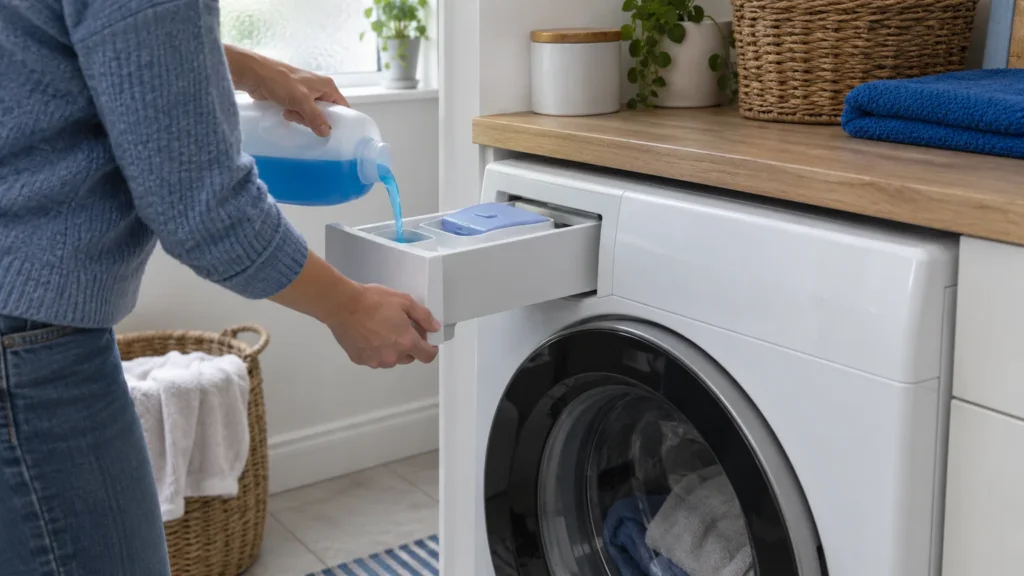
Its main benefit is convenience: you no longer need to measure detergent before each wash when the programme and detergent used are compatible.
This feature may suit you if your household does frequent loads of laundry. It reduces repetitive tasks and avoids pouring an estimated amount out of habit. You still need to refill the reservoir, check the settings and maintain it.
The benefits therefore go beyond convenience. A correctly configured dispenser can help reduce dosing errors. However, this does not mean it will always save detergent: the outcome depends in particular on how much you normally use, your chosen detergent and the machine’s available settings.
Does automatic dosing suit your laundry habits
This feature is particularly useful if you regularly use the same detergent and want simpler preparation. You can continue using your usual product, provided it is compatible, without having to measure it for each applicable cycle.
If you switch products depending on fabrics, colours or household needs, the dispenser’s flexibility becomes crucial. Before choosing a washing machine with automatic dosing, check the following points:
- Which detergents are permitted in the reservoir, including any restrictions on concentrated formulas.
- Whether automatic dispensing can be switched off to use another detergent occasionally.
- The instructions for changing detergents and cleaning the reservoir.
- Which programmes support automatic dosing.
Powder, capsules and specialist detergents require particular attention. Any use must follow the instruction manual; do not assume they can be placed in the automatic dosing reservoir.
Your other requirements still matter. A connected washing machine may meet a need for remote monitoring, while a washing machine with a delay start function can help with scheduling. These features should be considered separately from automatic dosing.
What automatic dosing does not guarantee
Dispensing detergent does not necessarily mean fully adjusting the dose. The exact functions vary between appliances. The documentation should specify which parameters the system uses and which settings you still need to adjust, particularly those for detergent concentration or water hardness, where available.
This technology alone does not guarantee better washing performance either. Choosing the right programme, following fabric care instructions and loading the right amount of laundry remain essential. It does not replace choosing a capacity suited to your household or reviewing documented consumption and noise levels.
Finally, the reservoir adds another component to maintain. Its accessibility and cleaning instructions therefore matter as much as how easy it is to refill.
To find the best washing machine with automatic detergent dosing for your household, browse the selection on this page with your laundry habits in mind. Prioritise clearly documented compatibility, understandable settings and maintenance you can easily keep up with.
How to choose your washing machine with automatic detergent dosing
Then check capacity, dimensions and consumption. The dispenser should simplify your routine without creating extra work whenever you change products.
Choose a dispenser compatible with your detergents
Start by looking at the products you use regularly. If you alternate between everyday detergent, a formula for delicate fabrics and powder, dispenser flexibility becomes a priority. Check the manual before buying to identify which products are allowed in the detergent reservoir.
The term “automatic dosing” does not establish compatibility with every formulation. Check restrictions on concentrated detergents, homemade preparations and specialist products. If compatibility is uncertain, ask the manufacturer for confirmation.
- Identify the detergent types accepted in each compartment.
- Check how to use powder or a capsule occasionally.
- Examine the detergent changeover procedure if you often switch products.
Check the settings and how to switch to manual dosing
A dispenser suited to your household should offer straightforward settings. Check the documentation for instructions on entering your detergent concentration and water hardness, where these settings are available. Do not assume the machine determines them automatically.
The switch to manual dosing deserves just as much attention. Check whether you can disable automatic dispensing for a cycle, where to add an alternative detergent and how to reactivate the system afterwards. An overly complicated procedure will be a drawback if you often change products.
Also compare the options for adjusting the dose. The aim is to adapt operation to your habits while following the detergent and appliance manufacturers’ recommendations.
Keep capacity and performance as priorities
Choose drum capacity according to your usual laundry volume and the bulky items you need to wash. A large capacity offers little benefit if it does not match your needs. Also check the appliance dimensions, required clearances and door opening.
Compare energy label information on the same basis. Examine water and electricity consumption, spin noise and spin performance. Automatic dosing alone does not establish that a machine uses less or washes better.
In a kitchen, the constraints of an integrated washing machine may become decisive. In a small room, first check whether a compact washing machine meets your needs and whether the reservoir remains easy to access.
| Criterion | What to look for | Common mistake |
|---|---|---|
| Compatibility | Approved products that match your habits | Assuming all detergents are suitable |
| Settings | Clear setup instructions and accessible manual dosing | Confusing automation with no need for adjustments |
| Capacity and performance | An appliance suited to your laundry and available space | Choosing solely for the dispenser |
| Maintenance | Accessible reservoirs with clear instructions | Neglecting draining and cleaning |
| Range | Useful features and documented support | Adding options without a specific need |
Plan ahead for cleaning and changing detergent
Before choosing, consult the maintenance section of the manual. Check whether the reservoirs can be removed, how to empty them and which parts need cleaning. Accessibility matters particularly if the installation restricts how far the drawer can open.
The reservoir cleaning must still fit into your routine. Follow the appliance-specific instructions rather than applying a universal schedule. Also check the recommended procedure before an extended absence or a change of detergent.
To choose between similar appliances, look for warranty terms, dispenser repair options and stated spare parts availability. These factors make maintenance requirements easier to anticipate.
Choose a range based on the features you actually need
Consider overall costs and useful services. Premium positioning does not guarantee that the dispenser will better suit your detergents. Conversely, a simpler option may meet your needs if its settings, maintenance requirements and performance are satisfactory.
Connected washing machine features become relevant if their controls or alerts offer you a practical benefit. Check which functions remain accessible directly on the appliance.
The Samsung WW11DG6B85LK is included in this selection. However, its commercial references alone cannot confirm the dispenser settings, compatibility or maintenance requirements. Consult its documentation before choosing it.
Mistakes to avoid
- Filling the reservoir without checking detergent compatibility.
- Assuming that concentration and water hardness are detected automatically.
- Forgetting to check manual dosing for occasional use of a different detergent.
- Expecting automation to consistently save detergent.
- Overlooking access to the dispenser once the machine is installed.
Key takeaways
The right choice combines compatibility, easy-to-access settings and straightforward maintenance. Check these points in the manual, then compare the appliances by capacity, energy and water consumption, and dimensions. Automatic dosing needs to fit your laundry habits to offer a real benefit.
What should you know before switching to automatic dosing?
How does automatic detergent dosing work in a washing machine?
Automatic dosing dispenses detergent from a reservoir, so you do not have to measure it out for every wash. The settings used to determine the amount vary by appliance. Before choosing, check what the system actually adjusts and which settings you still need to manage. Automatic detergent dispensing alone does not guarantee better washing results.
Which detergent should you use in a washing machine with automatic dosing?
Only use detergent approved in the washing machine's manual for its automatic dispenser. In particular, check the guidance on compatible liquid detergent, its concentration and any formulation restrictions. A detergent suitable for machine washing is not necessarily suitable for the reservoir. If you use a concentrated formula, also check the setup instructions before filling the dispenser.
Can you use powder detergent or capsules with automatic dosing?
Do not put powder or capsules in the automatic reservoir unless the manual explicitly permits it. If they can be used, follow the method specified by the manufacturer, which may bypass the automatic dispenser. Also check how to disable automatic dispensing for the selected programme. Avoid combining a manually added dose with automatic dispensing, as this can result in too much detergent being used.
Can you disable automatic dosing and add detergent manually?
Check whether each model offers this option, which programmes support it and where to add detergent manually. This is worth considering if you alternate between your regular detergent and a specialist product. Consult the manual to find out how to suspend automatic dispensing and whether this setting is saved. Having a reservoir does not in itself confirm flexibility when dosing manually.
How do you adjust dosing for detergent concentration and water hardness?
Follow the guidance in the manual and on the detergent packaging, using the settings available on your appliance. You can find out your water hardness from your local water supplier. Do not assume that the machine detects this information automatically.
Does automatic dosing really use less detergent?
It can reduce overuse if you tend to pour in too much detergent, but savings are not guaranteed. The result depends on your usual dose, the detergent used and the machine's settings. When choosing a washing machine with automatic dosing, prioritise ease of adjustment and compatibility with your habits. This feature does not indicate water or electricity consumption either.
How do you clean the automatic detergent reservoir?
Clean the reservoir according to the procedure in the manual, using only approved products and methods. Before buying, check whether the dispenser is removable, how it is emptied and which parts are accessible. Do not use a descaler or run a system rinse cycle unless instructed to do so. Reservoir accessibility matters when choosing, as it determines how easy it is to maintain and change detergents.
Should you empty the reservoir before changing detergents?
The procedure depends on the dispenser and the products involved; consult the manual before topping up the reservoir with a different detergent. Check whether draining or cleaning is required, then adjust the concentration setting if this option is available. For occasional use of a different detergent, consider adding it manually with automatic dosing disabled. This avoids unnecessarily changing the contents of the reservoir.